5 produits


Affichage de
5
sur
5


5 produits
Your welding capabilities determine which product you should purchase

Powerful 10-in-1 Aluminum Welder&Cutter
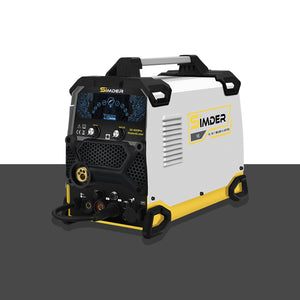
Take your welding skill to the next level

MIG / MAG / TIG / ARC(Stick)/Plamsa Cuter

Pulse MIG/TIG/Stick

GAS MIG/Flux Core/Stick/Lift TIG

Gasless MIG / ARC(Stick)
While MIG welding can be used on aluminum, it's generally considered more challenging than TIG welding. Professionals often recommend TIG for its superior control and cleaner welds. However, MIG does have its place. Some welders prefer MIG for thinner aluminum sheets, and it can be a more cost-effective option for certain applications. Ultimately, the best choice depends on the specific project, your experience level, and the desired outcome.
No, MIG weld works without Gas
Forget the need for an extra gas tank! Flux-cored wire filler metal, also known as FCAW-S (flux-cored arc welding, self-shielded), has become a go-to option for MIG welders who want to skip the additional gas setup. This method isn't just for beginners – it allows experienced welders the flexibility to create high-quality welds in diverse situations, making it a truly versatile choice.
MIG welding excels at tackling thin metals, delivering clean and precise welds. However, its capabilities have limitations. For thicker steel projects demanding deep welds, MIG welding might not provide enough penetration to ensure a strong bond. Additionally, the need to replace the shielding gas can add downtime to your project, and the gas bottle itself can sometimes obstruct your workspace and maneuverability during welding
MIG welders offer a user-friendly experience, but achieving a strong and clean weld requires a bit more than just pulling the trigger. Spending just 5 minutes on prep work can make a world of difference. Thoroughly cleaning the metal surfaces you're joining removes dirt, oil, and other contaminants that can weaken the weld.
MIG welding stands out as the perfect beginner's choice due to its user-friendly nature. Unlike other processes, MIG operates with just two key settings and utilizes a semi-automatic, point-and-weld approach. This translates to quicker learning and less frustration.
For optimal results with smaller diameter wires, aim for a welding wire stickout of 5/8 inch or less. This short stickout helps you control the amperage, which directly impacts heat input and weld characteristics. A longer stickout reduces amperage, leading to shallower weld penetration.
Though both MIG and ARC/Stick welding deliver strong results, their applications differ. ARC welders excel at thicker metals, achieving deeper penetration for a robust weld. They also handle dirty or windy environments better. However, MIG welders offer the advantage of working with aluminum, a material incompatible with ARC welding. So, the choice boils down to your project's needs.
Flux-cored arc welding shines when working with dirty, rusty, or contaminated metals. Its secret weapon? A self-contained flux in the electrode that produces a protective gas shield. This shield not only keeps the weld clean but also allows for outdoor welding and any welding position, making it a versatile choice. Even better, flux-cored arc welding boasts a user-friendly learning curve, ideal for both beginners and experienced welders.
Flux-cored arc welding (FCAW) stands out as a versatile champion in the welding world, favored by both beginners and seasoned industrial pros. Its popularity stems from its ability to strike a perfect balance. FCAW offers impressive deposition rates, resulting in faster completion times, while simultaneously delivering welds boasting excellent mechanical and chemical properties.
Self-shielded flux-cored wires offer a convenient alternative to traditional welding methods. Unlike standard options, they eliminate the need for an external shielding gas. This simplifies setup and allows for greater portability. The secret lies within the wire itself. As the flux core burns during the welding process, it generates a protective gas that shields the molten metal from contamination, creating a strong and reliable weld.

